THE FION FRAMEWORK · HEAVY INDUSTRY

THE INDUSTRIAL ENGINE

Brownfield Revitalization: Rebuilding Nigeria’s Steel & Heavy Industry

Rebuilding the industrial capacity that drives a national economy. FION’s Heavy Industry pillar proposes a phased Brownfield Revitalization and Off-Take Strategy—revitalizing existing assets while creating guaranteed demand for the steel and industrial inputs Nigeria needs.

FION INDUSTRIAL HAVENS · PILOT PROJECT

ADUGBE INDUSTRIAL CITY

The Pilot for Nigeria’s Industrial Havens

The Vision: A Self-Sustaining Economic Ecosystem. In the FION National Industrial Framework, we recognize that infrastructure alone does not build a nation—we need designated zones where manufacturing and processing can thrive without the friction of poor power, bad roads, and regulatory bottlenecks.

1,000 Hectares Planned industrial haven in Ezi Kingdom, Delta State
NEPZA Registered industrial haven
Closed Loop Connected manufacturing, processing and infrastructure
The vision

Transforming Raw Land Into a World-Class Manufacturing Hub

To prove this model, FION is partnering with the Ezi Kingdom in Delta State to develop the Adugbe Industrial City—a 1,000-hectare, NEPZA-registered industrial haven designed to transform raw village land into a world-class manufacturing hub.

Adugbe is not just a factory; it is a closed-loop city where one industry's waste or byproduct becomes another industry's raw material. It is designed to provide water, power, housing, and security, creating a stable environment for both local and foreign investors.

The industrial philosophy

Infrastructure. Manufacturing. Community.

A connected industrial ecosystem where utilities, production, logistics and residential infrastructure work together to support long-term industrial growth.

The core industries

Building the Materials and Industries Nigeria Needs

To drive an industrial revolution, we must move beyond raw material export and begin producing the chemicals, materials, and goods needed to build the country. Adugbe is focused on four primary manufacturing zones.

Industrial wood processing 01

Advanced Wood Processing & Carbonylation

The Circular Economy. We are moving beyond simple timber milling. Adugbe will feature a state-of-the-art wood processing and carbonylation plant.

The Process

We will utilize carbon monoxide (CO) derived from our power plant and wood gasification to produce industrial chemicals like acetic acid. This is the backbone for wood modification and treatment.

The Output

Treated, high-durability lumber for construction, high-end furniture manufacturing, and wood-cement composite boards. This drastically reduces Nigeria’s reliance on imported furniture and construction materials.
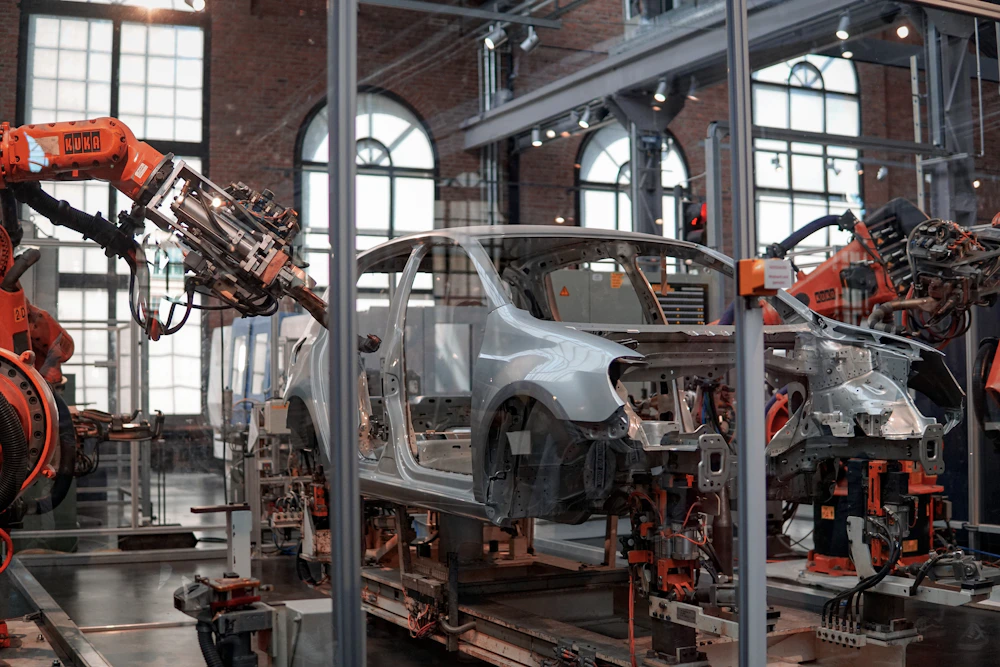

Industrial plastics manufacturing 02

Plastics & Petrochemicals

Building the Nation’s Arteries. Nigeria cannot build roads, pipe water, or lay gas lines if we are importing every plastic pipe.

The Output

Adugbe will house facilities producing HDPE and PVC pipes for national water and sewage grids, plastic packaging for agricultural exports, and automotive components.

Green Innovation

We are also pursuing bio-plastics derived from cassava and plantain starch. This creates a new, massive agricultural value chain for Delta State farmers while providing eco-friendly packaging materials.

Agricultural production and farming 03

Food Processing & Agriculture

A stable industrial city must feed its workers and create value from the land.

The Output

Greenhouses for year-round vegetable production, cassava and plantain farming, and poultry/livestock facilities. This feeds directly into a dedicated food processing zone that packages and processes goods for local and regional (ECOWAS) export.

Energy infrastructure and power generation 04

Power & Utilities

You cannot industrialize without energy.

The Output

A hybrid solar/gas power plant that serves the entire 1,000 hectares and the surrounding community. The CO₂ and CO emissions from this plant are captured and fed directly into the carbonylation and industrial chemical processes, creating a green, circular energy loop.

How it fits the FION ecosystem

Adugbe Is Not an Isolated Project

Adugbe is the physical destination of the FION framework, connecting land security, national transportation infrastructure and automotive manufacturing into a unified industrial system.

01

Land Mapping & Security

The land will be securely surveyed and titled, providing a safe investment environment.

02

Transport & Logistics

Once the Niger River dredging and rail lines are established, Adugbe's products will be shipped directly to coastal ports, drastically reducing logistics costs.

03

The CAN Pilot

The auto parts produced in Adugbe will eventually feed directly into the Certified Automotive Network, creating a closed, standardized national supply chain.

The community impact

Building a Community, Not Just Factories

Adugbe is built on the principles of dignity and partnership. The industrial city will feature dedicated infrastructure designed to support workers, families and the surrounding community.

01

Worker Housing

A dedicated housing zone designed to support the industrial workforce.

02

Medical Facility

Modern healthcare infrastructure for workers and residents.

03

Elder Care Home

Dedicated elder care infrastructure as part of the community model.

04

Police & Fire Station

Safety and emergency response infrastructure within the industrial city.

A blueprint for Nigeria

Adugbe Is the Blueprint.

Once proven, this model will be replicated across Nigeria, creating interconnected industrial havens that support manufacturing, employment, community development and national economic growth.

BUILD. CONNECT. INDUSTRIALIZE.
The reality

A Rusting Giant

Nigeria cannot industrialize without steel. Yet, for decades, we have imported billions of dollars in steel products while the Ajaokuta and Itakpe complexes—designed to be the backbone of our economy—have remained largely dormant.

The traditional approach of seeking a single buyer to take over the entire complex has failed for over 40 years due to legal entanglements, obsolete technology, and astronomical capital requirements.

The FION approach

We Don't Wait for the Entire Complex to Be Perfect.

FION abandons the failed models of the past. We revitalize in phases, guaranteeing demand before the first furnace is lit.

The strategy

The “Steel & Ship” Consortium

We are proposing the structuring of a consortium under a Build-Operate-Transfer (BOT) or Concession model with the Federal Government. Donzila Nigeria Ltd acts as the Ecosystem Architect and Local Content Enabler.

01

The Technical Partner

A global steel entity with the engineering capacity to refurbish and modernize the existing Soviet-era equipment.

02

The Financial Partner

Infrastructure funds and Development Finance Institutions (DFIs) providing the capital for phased revitalization.

03

Donzila / FION — The Demand Guarantor

We do not just make steel; we create the guaranteed market for it.

The output

Building the Nation’s Arteries

The revitalized complex will not produce raw steel for export alone. It will produce the specific industrial inputs required by the FION ecosystem.

01

Shipbuilding & Marine Infrastructure

By linking steel output to the dredging of the Niger and Benue rivers, we will supply the steel plates required to build river-going vessels, barges, and inland port infrastructure.

02

Construction Equipment & Agri-Tools

We will produce the steel for structural beams, reinforcement bars, and the manufacturing of agricultural machinery (ploughs, harvesters) and construction tools.

03

The Adugbe Synergy

The steel produced here will feed directly into the Adugbe Industrial City, where it will be fabricated into finished goods (pipes, auto parts, and machinery) for domestic use and regional export.

The masterstroke

Financing the Artisans Through Land Mapping

The greatest failure of Nigerian industrialization is that we build factories, but we do not empower the people to use the products. We train thousands of welders and fabricators, but they graduate without the tools to start their own businesses.

FION solves this by integrating the National Land Mapping & Geopinning System with our heavy industry.

01

Training

Artisans are trained in modern fabrication at our vocational hubs.

02

The Tool Loan

Using the national geopinned land registry, banks can confidently issue Tool Loans to these artisans, using their verified property titles as collateral.

03

Guaranteed Procurement

Donzila acts as the procurement agent. The loan is used to bulk-purchase the tools manufactured in our industrial havens and deliver them directly to the artisans.

The Result: A closed-loop economy.

We produce the steel, we manufacture the tools, we train the people, we finance the tools through land mapping, and the artisans go out to build Nigeria.

Why this works

One Strategy. Three Clear Benefits.

01

For the Government

It revives a dead asset without a massive upfront cash outlay, resolves the legal logjam, and creates mass employment.

02

For Investors

It eliminates the risk of building a plant with no buyers. The demand (shipbuilding, construction, Adugbe) is locked in before production begins.

03

For the People

It creates a pathway from unemployment to skilled, tool-owning entrepreneurship.

The FION proposition

The Economic Engine That Drives the Framework

FION is not just proposing a steel mill. We are proposing the economic engine that drives the entire national framework.

← Back to the FION Framework